Archive - Misc RSS Feed

Know the Arguments for Skepticism and Common Sense

The rationalists relied on reason, not sensory experience, to explain the world. In turn, the empiricists—John Locke, George Berkeley, and David Hume—argued that knowledge comes from experience, not pure reason. Taken as far as logic allows, that entails some astonishing claims about reality.

Primary and secondary qualities

For Locke, primary qualities exist in the world, and secondary qualities in the perceiver. Solidity, extension, shape, motion, number—these exist whether they’re perceived or not. But attributes like color, sound, and scent exist only when perceived; there can be no image without an eye. (He didn’t reject reason altogether; rather, he thought that knowledge comes from the application of reason to sensory data.)

Berkeley, moved by Locke’s arguments regarding the uncertainty of secondary qualities, went further: he rejected Locke’s primary qualities, too. Berkeley thought that the distinction between qualities invites all sorts of skepticism. If we know only our own ideas, how can we trust them without ever comparing them to unmediated reality?

Perceptions, not material objects

The solution is simple: deny the existence of matter. If an apple is not only our collection of perceptions but also a material object, we may doubt that object, and such doubt is abhorrent to common sense. But if we define the apple as nothing more than our perceptions, it is beyond doubt.

The world doesn’t exist on its own, Berkeley argued—only perceptions do. Being is nothing more than being perceived.

Do objects come in and out of existence as we perceive them? Not quite. God always sees all things; thanks only to his perception, objects persist.

Hume’s doubt of the self

Hume, the most rigorous of the empiricists, developed Berkeley’s claims against the world to their logical end. People, he argued, “are nothing but a bundle or collection of different perceptions, which succeed each other with inconceivable rapidity, and are in a perpetual flux and movement.” Since there is no perception of self, there is no self.

This has some incredible consequences:

  • It invalidates Descartes’ “I think, therefore I am,” which now merely assumes the “I” it would prove.
  • It finishes off the distinction between self and world, which had so long dominated Western thought.
  • It precludes the soul.

But that’s ridiculous!

Hume took empiricism so far that, for most people, it became unbelievable. In turn, Thomas Reid argued that belief in the world is the basis for meaningful philosophy—that if you don’t believe in the world as perceived, philosophy is useless. The difference between object and sensation, he argued, is obvious to common sense. In response to Hume’s doubt of the self, Reid noted that, in order to talk about philosophy, you must believe that you’re talking with another person. If you don’t, you’re insane, and not worth engaging in conversation. Refreshing, no?

On Reid’s common-sense foundation, Alvin Plantinga and Nicholas Wolterstorff developed the modern notion of Reformed epistemology, which defines belief in God as “properly basic”—belief that need not be proven from other truths. Despite the lack of irrefutable arguments for other minds, we believe in them; believing in God is just as reasonable.

Understand skepticism and common sense

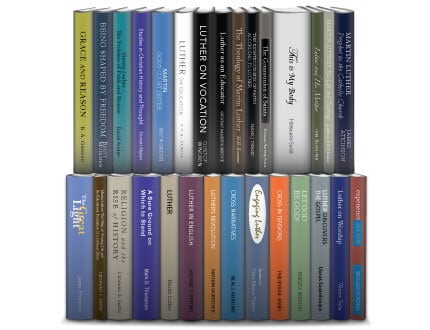
Together, the Classics in Empiricist Philosophy Collection and The Works of Thomas Reid give you Locke’s, Berkeley’s, Hume’s, and Reid’s essential arguments, all searchable and cross-referenced. You’ll know the evidence for and against empiricism and common-sense philosophy, and you’ll understand Reformed epistemology’s foundations. Both collections are on Community Pricing for around 80% off; with more bids, the price could go even lower.

Know the arguments for skepticism and common sense—place your bids today:

Then sign up to get news and updates about more classic works of history, literature, and philosophy:


What’s the Purpose of the Gospel?

Pastorum 2013 is quickly approaching, and we’re excited to have speakers such as Michael Goheen, Ed Stetzer, Mark Futato, and others.

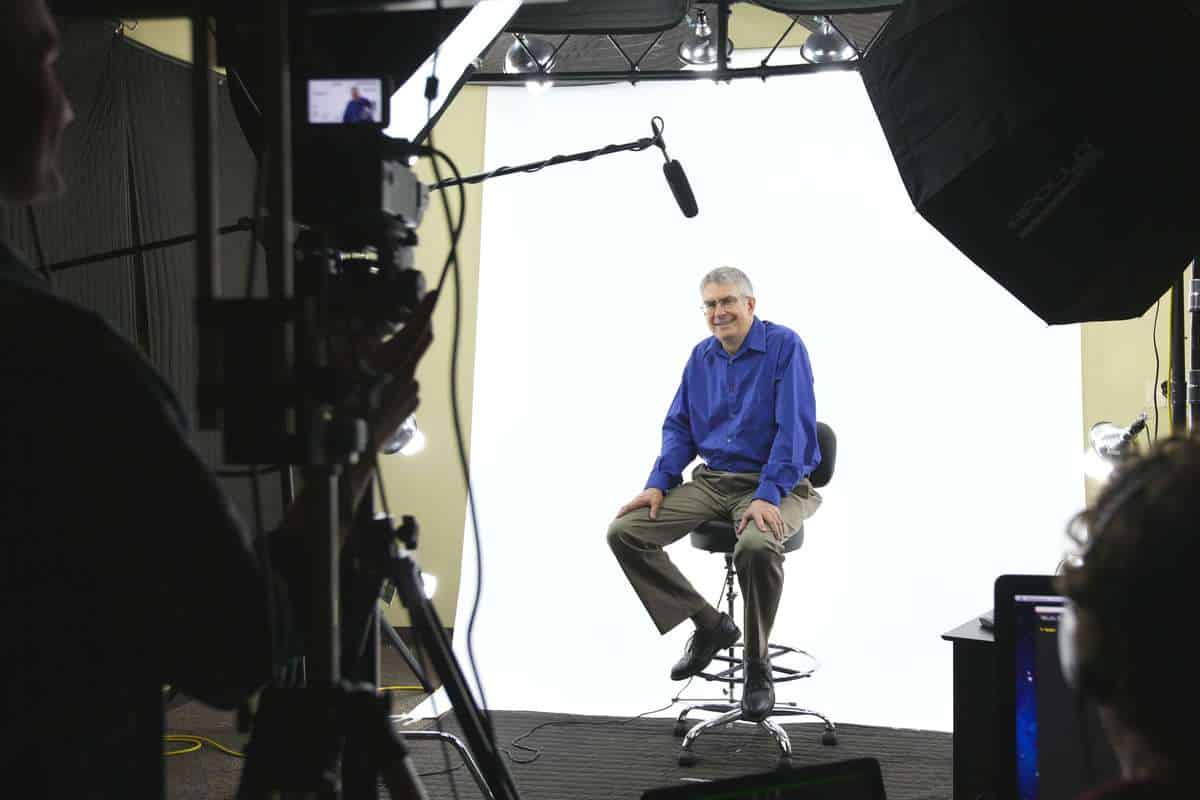
At Pastorum 2012, some of the top internationally recognized scholars gathered to dig deeper into God’s Word. Here’s Pastorum 2012 speaker Scot McKnight on the purpose of the Gospel and evangelism:


Join Mark Glanville and Lynn Cohick at Pastorum 2013 and unpack the purpose of the Gospel.

“The biblical story is the story of God’s recovering his purposes for creation through the death and resurrection of his Son, Jesus Christ, and calling people to live as signs to Christ’s restorative reign. How to think of this, how to preach this, how to lead for this, how to gossip this in our churches . . . . these are the questions of Pastorum.”

—Mark Glanville

“I would like to encourage pastors and leaders in reading Scripture well. At Pastorum we will focus on the reality of Jesus as a first-century individual and Jew. We will make connections between our twenty-first century world and the biblical world. We will learn the importance of hermeneutics in our study practices.”

Lynn Cohick

Register now—we’ll see you at Pastorum!

3 Reasons to Participate in Faithlife’s Resurrection Reading Plan

fsbeaster300x300Over at the Faithlife blog, we’re preparing for Easter with a reading plan focused on the Resurrection. Designed to help Bible studies, worship teams, families, and individuals explore the power of the Resurrection, it leads groups through 14 biblical passages on the Resurrection.

Here’s why you should participate:

  1. You’ll study the Resurrection with your friends and family. Faithlife allows you to share comments and questions within your group. With the Faithlife Study Bible app, each group member can view the same Logos-powered study notes with their preferred Bible translation. And with the Faithlife Prayer Widget, your group can share both prayer requests and how their prayers were answered.
  2. It’s free and easy to join. With the free Faithlife Study Bible app, the reading plan fits in your pocket or purse. You can catch up on the readings or join in discussion whenever and wherever you want.
  3. You’ll dig deeper and save time. The Resurrection reading plan is powered by the world’s leading Bible software, Logos 5, and each day’s reading is already planned out for you. And because Faithlife and Logos 5 connect seamlessly, your group can explore the Resurrection with the Faithlife Study Bible notes and of Logos 5′s tools and features.

Ready to join? Click here for instructions on how to join Faithlife and a reading group.

Get Updates on Products in the Anglican Tradition

Book of Common PrayerLogos is adding resources that focus specifically on the Anglican/Episcopalian tradition. To that end, Logos has made me the Anglican product manager and tasked me with identifying important works from the Anglican/Episcopalian tradition that we can add to our existing Anglican products. As someone who just completed a thesis on early nineteenth-century Anglicanism (particularly the Oxford or Tractarian Movement), I am aware of many products we can add and very enthusiastic about the pairing of Anglican products with Logos’ powerful platform.

Often considered the Via Media (middle way), Anglicanism has historically drawn on resources from a wide variety of Christian traditions in addition to its own. Consequently, Anglicans will benefit from having their own specific resources integrated into Logos’ extensive product line (some 32,000 titles from all Christian traditions).

The Anglican tradition has significantly influenced other Christian traditions. The King James Version of the Bible was produced at the command of King James I for use in Anglican worship. Anglican bishop Thomas Ken wrote the familiar Doxology “Praise God from whom all blessings flow.” The poets John Donne and George Herbert were both writing from the Anglican tradition. More recently, the influential writings of C. S. Lewis, the biblical scholarship of N. T. Wright, the theology of J. I. Packer and John Stott, and the evangelistic/educational Alpha Course have all come out of Anglicanism. So, whether you are Anglican or not, this new product is good news. You’ll have access to the wealth of Anglican resources alongside the abundance of resources from other Christian traditions.

Under the mercy,
Benjamin Amundgaard

Get updates on all our Anglican products by joining our email list!


Last Chance: Round 1 Ends Today!

MM_200X200-05Round 1 of Logos March Madness ends today at 5 p.m. If you haven’t voted, vote now! If you have voted, help your favorite authors—share them on Facebook and Twitter.

Once Round 1 is finished, 32 authors will remain, vying for your votes to move on. For each author in Round 2, we’ll discount a collection or title by 35%.

Here are a few authors predicted to win and move on from Round 1:

  1. N. T. Wright
  2. John Piper
  3. Charles Spurgeon
  4. Martyn Lloyd-Jones

Want to see whose works will be discounted by 35%? Sign up to receive exclusive Logos March Madness updates!


Remember: get your votes in, and share with your friends.
Vote now!

Need a Bigger Book Budget? Prove It.

Pastor's LibraryYou need more books.

Whether you’re a pastor, missionary, chaplain, or church leader, you know you need more books. Most churches and organizations know you need more books, too; that’s why they give you a book budget.

But what if you need more books than your budget allows? What if your book budget just isn’t up-to-date? What if you don’t have a book budget at all?

How do you prove that you need a bigger book budget?

It’s a difficult thing to prove objectively . . . unless you have some stats to back it up.

The Pastor’s Library survey is back!

It’s time to get you some current statistics. We’re getting thousands of pastors and church leaders to weigh in on important book budget matters, like:

  • Does your church provide you with a book budget?
  • How has the cost of books changed?
  • How big should your book budget be?
  • How do congregation sizes relate to book budgets?

Take this 10-minute survey now. Once we get enough responses, we’ll share the results. We’ll also help you gauge how big your book budget should be, so when you ask for a bigger book budget, you’ll have the numbers to back it up.

This survey helps everyone

When you take this survey, you’re not only helping yourself. You’re also helping all these people:

  • Your congregation. You’ll understand how much money you need for books—books to help you preach the Word to your church.
  • Your family. With a bigger book budget from the church, you’ll spend less of your family’s cash out-of-pocket on books, so you can spend it on other necessities.
  • Other pastors everywhere. Your response makes this survey more reliable, helping other pastors get the book budgets they need, too.
  • Logos (and therefore, you again). Our mission is to serve the church, and the better we know you, the better we can serve you.

So, you need a bigger book budget? Let’s prove it—take the Pastor’s Library survey right now.

20 Resurrection Sermons Just Waiting to Be Preached

More people go to church on Easter than on any other day of the year, and churches around the world are preparing for more visitors. How do you get ready for them without cutting into sermon prep time?

What if you could save so much time on sermon prep that planning for extra parking, extra seating, extra childcare, extra ushers, and other important things didn’t come at the expense of a great Easter sermon?

Or better yet: what if you could strategize the next two decades’ worth of Easter sermon ideas right now?


20 Easter sermon ideas right now? No way.

It’s not as tough as you might think—not if Logos 5 has your back. Just look up the resurrection of Christ in the Sermon Starter Guide!

Resurrection Sermons

Immediately, you’ll get a list of key passages that describe the resurrection, and each one could be your starting point for a sermon:

  1. Why the resurrection was important to David, Israel, and us (Ps. 16:8–11, Ac. 2:29–31)
  2. Jesus, Jonah, and you (Mt. 12:40)
  3. Who witnessed the resurrected Savior? (1 Co. 15:3–8)
  4. Jesus: alive forevermore! (Re. 1:17–18)

You’ll also see links to entries in the Topic Guide for “Easter” and the “Resurrection of Christ.” These entries connect you to more passages and resources that address these topics, leading to more sermon ideas:

  1. What is Easter, anyway?
  2. What the resurrection meant to Matthew
  3. What the resurrection meant to Mark
  4. What the resurrection meant to Luke
  5. What the resurrection meant to John
  6. What the resurrection meant to Paul
  7. What the resurrection meant to Peter

And then you’ll find a long, long list of pericopes (Bible excerpts) that relate to the resurrection. This can give you a good idea for Scripture to read during worship. And of course, there are plenty of sermon ideas here, too:

  1. Jesus is risen—now what? (Mt. 28)
  2. Do you recognize him? (Lk. 24:13–35)
  3. Are you a doubting Thomas? (Jn. 20:19–29)
  4. Jesus still provides (Jn. 21:1–14)

The Sermon Starter also gives you entire thematic outlines to work from, so you can go straight to Logos for a skeleton to use in your Easter message:

  1. Who foretold Jesus’ resurrection?
  2. How sure can we be of Jesus’ resurrection?
  3. Why was Jesus’ resurrection necessary?
  4. What happened when Jesus rose from the grave?
  5. How do we benefit from the resurrection of Jesus?

And on top of all this, the Sermon Starter searches your library for sermon ideas and includes them in the report! You’ll also get links to hymns, media, and more supplementary sermon material.

What’s #21? You tell me!

When I started writing this post, my working title was “7 Easter Sermons Just Waiting to Be Preached.” Then I opened the Sermon Starter and realized that seven sermon ideas really sold this tool short. There are so many Easter sermon ideas in Logos 5.

And that’s just Easter. Now imagine how Logos can help you prep for Christmas, Mother’s Day, Father’s Day . . . the list goes on and on.

Don’t go another Sunday without the world’s leading Bible-study and sermon-prep software. Get Logos 5.

Already have Logos 5? Learn to use it for richer Bible study and ministry with our educational resources!

How Knox’s Degrees Fit Your Busy Life

Scott_LindseyToday’s guest post is by Scott Lindsey, our ministry relations director here at Logos.

To say my life is “crazy busy” is an understatement. I’ve been married to the love of my life for 21 years. I have five amazing children. My wife and I home school. And I travel. When I say “travel,” I mean over 100,000 miles per year. They know me at many major airports. I have a “United Airlines” tattoo. (Ok, maybe not.)

In 2012, Logos and Knox Theological Seminary created a game-changing partnership. A partnership combining the best in theological resources and technology with a world-class faculty and seminary. When I first heard about the partnership, I thought, “Where have you been all my life?” I’ve always wanted to go to seminary, but moving my family, quitting Logos, and going back to school fulltime is not an option. But the Logos/Knox program is a very viable option!

Three weeks ago, I started my seminary journey—I enrolled in the MABTS program at Knox. It’s exceeded my expectations on many levels:

  1. The classroom comes to you. Technology allows Knox to bring the lectures to your computer screen with world-class instructors like Drs. Bruce Waltke, Warren Gage, John Frame, Gerald Bray, Samuel Lamerson, and others. I’ve even watched lectures on my iPhone while sipping coffee at my favorite coffee shop.
  2. Portfolio! Imagine a $78,000 theological library at your fingertips. As I mentioned, I’m a big fan of Logos, but as a student, I’m learning much more about this amazing tool. And when I graduate, the library will be mine forever. I did my MBA through distance education, and graduated with about 20 books. This time, I’ll graduate with over 2,500 books for a lifetime of learning.
  3. Learning at my own pace. Yes, I have lots of assignment deadlines now, but I get to decide when to do the course lectures, readings, and other materials. I can watch lectures at 31,000 feet, finish course readings on my iPad in bed, or do my writing assignments during my lunch break with my laptop. When I think about all the time I’ve wasted on trivial things like TV, surfing the web, and posting what I eat to Facebook, I realize I would rather use that time to learn more about my God and my faith.

So, if you heard about the Knox/Logos partnership and thought to yourself, “I would love to do that, but my life is just too crazy!”—believe me, you can do it! And you’ll be glad you did.

You’ll deepen your love for the Gospel and get in-depth training for effective ministry with Knox’s online MABTS. To learn more or apply now, call 1-800-210-6466 or visit SeminaryDegreesOnline.com/Degrees/MABTS.

What’s the Significance of Biblical Words?

If you missed the Pastorum Live 2012 conference, you missed out on powerful teaching from 21 of evangelicalism’s leading scholars. Pastorum Live featured more than just lofty theology; it was scholarly teaching instantly applicable to your study and ministry.

In this short clip, Dr. Mark Futato explains what the specific word choices in Scripture can tell us about God and his character.


Join Dr. Futato, Ed Stetzer, Dr. John Walton, Jonathan Dodson and many others in Chicago April 11–12 for Pastorum 2013. When you register for Pastorum by Friday, March 8, you’ll receive a discounted rate—only $79! Register now!

How to Endorse Logos, Even if You’re Not Famous

Base Packages IIWe love helping people get into the Word. Every time someone gives us a shout-out, it tells us that we’re on the right track. That goes for prominent Christians and everyday users alike. Like Jayson said a few weeks ago, every single endorsement matters, including yours.

In fact, anytime you want to comment on a product, you can write a public review on our website.

3 reasons your review is important:

  • You help others make an informed decision. You get to list all your favorite features, titles, articles, and the like, along with areas in which a product could improve. Your honest review might be just what someone else needs to start using Logos 5 to study the Word.
  • You keep us accountable to excellence. You can rate any product up to 5 stars, call out the ways in which a product helps you with Bible study, and help guide Logos Bible Software as we pursue our company mission to serve the church.
  • You get to share new ways to use our software. We have a pretty big group of people working here (and we’re hiring more!), but there’s no way we can cover every single way that Logos 5 can improve Bible study in every walk of life. But you know how it helps you, and you can share your story with others like you.

So, what do you think of Logos 5?

If you own a Logos 5 base package, write up a review and rate it on the product page! Here are quick links to each one—join the conversations at the bottom of each page (make sure you’re signed in).

Want to weigh in on products outside of base packages? You can review those, too—start now!

Page 5 of 70« First...«34567»102030...Last »