Archive by Author

The Theological Consequences of Kant

When it comes to philosophy, nearly everyone’s heard of Immanuel Kant—and for good reason. Kant resolved a century-long gridlock between the rationalists and the empiricists by proposing a new way of thinking about how we come to know anything at all. Kant is also famous for inspiring competing interpretations. In his wake, two fascinating thinkers proposed different ways of understanding Kant’s theological consequences: Friedrich Schleiermacher and Georg Wilhelm Hegel.

Kant’s revolution

The rationalists argued that knowledge results from the proper use of reason, whereas the empiricists claimed that knowledge derives from sense experience alone. Kant redefined the terms of the debate by asserting a more fundamental claim: we don’t conform to the objects of our perception; rather, they conform to us. We don’t perceive objects in and of themselves; instead, our mind shapes how we perceive objects and the world.

In doing so, Kant made the knower, not the known, the primary object of philosophical inquiry. By extension, we can only know things as they appear to us, not as they are in themselves. This turn toward the subject not only moved the conversation beyond the rationalists and empiricists—it revolutionized the direction of Western philosophy.

Schleiermacher

Since we don’t directly perceive God, Kant’s turn toward the subject undermined the claims of orthodox Christian belief. Friedrich Schleiermacher negotiated Kant’s critique by redefining religion as feeling—the capacity to sense the infinite—believing this to be the best way to preserve the possibility of Christian theology. Neither a creed requiring our assent, nor a moral code that must be followed, religion is consciousness of our absolute dependence on the infinite.

Schleiermacher considered it his responsibility to awaken and cultivate this consciousness in others. He attempts to do so in On Religion: Speeches to Its Cultured Despisers, arguing that religion’s dogmatic claims—which, after Kant, cannot be established as knowledge—are not religion at all. True religion lies in that which inspired theologians to first speak about God at all: the feeling of absolute dependence on the infinite.

Hegel

Unlike Schleiermacher, Hegel criticized Kant’s critique. He maintained that there is no meaningful way to distinguish between things-in-themselves and our perception of them. He did away with things-in-themselves, asserting that our thoughts about the world are synonymous with the way the world actually is. He also considered the fundamental category of reality to be Mind or Spirit, of which we are simply a part.

Hegel understood the development of human history as coterminous with Spirit’s coming to know itself. His Phenomenology of Mind outlines this dynamic, evolving process in terms of dialectic. In works containing his lectures, Hegel articulates how the evolution of history and religion also reflect this process. For Hegel, Christianity represents the culmination of all religious forms—the one that most accurately reflects Spirit’s understanding of itself.

Understand Kant’s influence on German theological thought

Together, the Friedrich Schleiermacher Collection and the Works of Hegel give you the central texts of these important German thinkers. Discover how they wrestled with Kant’s thought and developed theological proposals that continue to influence Christian theology today. Both collections are on Community Pricing for 80% off! With more bids, the price could drop even further.

Bring these core texts into your library—place your bid now!

Plato and Aristotle Coming to Your Logos Library!

Two must-have philosophy collections are now on Community Pricing: The Dialogues of Plato (5 vols.) and The Works of Aristotle (12 vols.).

Plato and Aristotle are more than required reading—they sit at the foundation of Western thought. And even though they lived several centuries before Christ, their writings greatly influenced the development of Christian theology.

Take Plato and Augustine, for example. Plato distinguished between the physical and spiritual realms and recognized the existence of eternal, unchangeable forms. Augustine drew from Plato in coming to terms with Christianity, describing in his Confessions that the writings of the Platonists helped him recognize the truths of Scripture (Book VII).

Aristotle’s writings provided Thomas Aquinas with the framework for his magnum opus, the Summa Theologica. He adopted Aristotle’s account of the physical world, as well as his approach to moral philosophy and ethics. Aquinas held Aristotle in such high regard that he refers to him simply as “the Philosopher” throughout his work.

The Logos editions of Plato’s and Aristotle’s works allow you to discover connections between these philosophers and the theologians that drew from them. Search key terms in Plato and Augustine and compare their thoughts side by side. When Aquinas references Aristotle, jump to that location in his corpus with a click. Enhance your Logos library and your theological study with these core texts of the Western tradition. Bid on The Works of Aristotle (12 vols.) and The Dialogues of Plato (5 vols.) today!

But why stop at Aristotle and Plato? Sign up to receive news and updates about more classic works of history, philosophy, and literature!


Immerse Your Church in Abraham’s Story

Pastors have the great privilege of bringing their church together in Bible study. Yet unifying a church community around a solid, engaging curriculum can be challenging. It takes time and energy to put together a program that coordinates study for individuals, small groups, and preaching. That’s why Logos created Abraham: Following God’s Promise: Complete Church Curriculum.

In addition to resources for small groups, the Complete Church Curriculum comes with sermon resources that provide solid teaching materials for Sunday mornings and Wednesday nights.

Eight sermon outlines form the core of curriculum. Designed to complement the small group lesson plans, the sermon outlines equip you to preach Abraham’s story. Beautifully crafted, the sermons reinforce the material found in the book version of Abraham: Following God’s Promise. And the week’s small group lesson can be brought to life Sunday morning with expanded material focusing on exhortation and application as well as interpretation and theology.

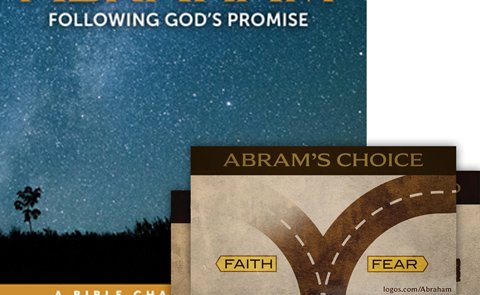
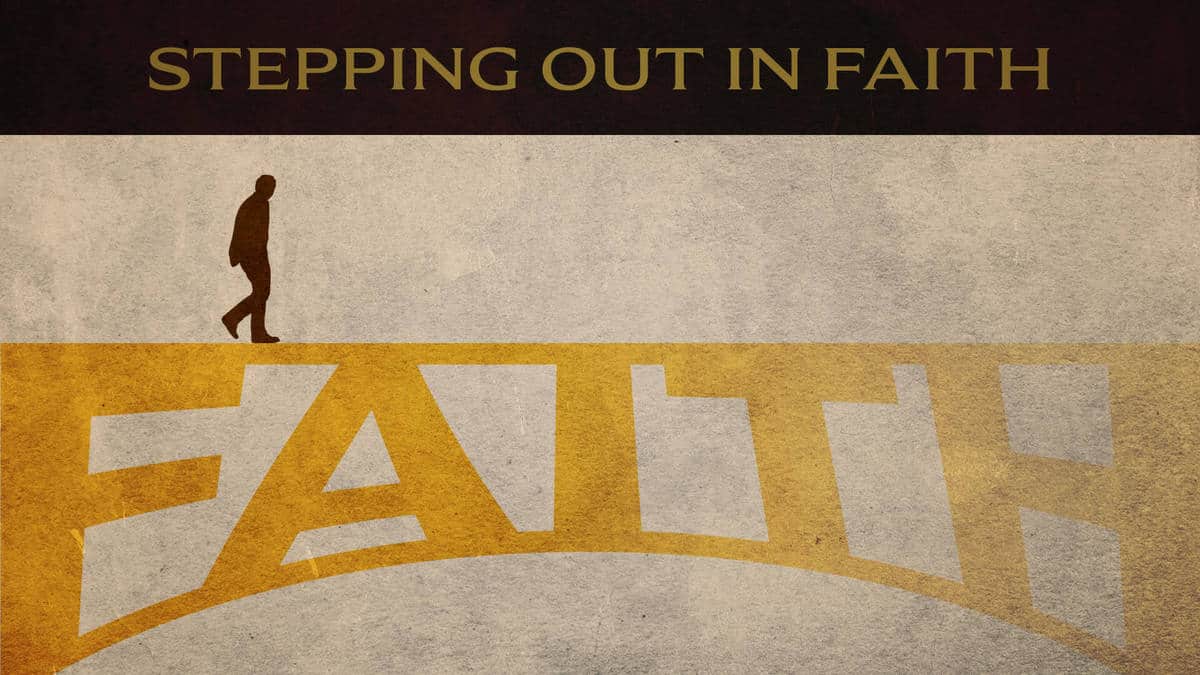
Each sermon includes a teaching slideshow. With graphics, Scripture passages, and reflection questions, the slideshows help you communicate your sermon visually. Thumbnails of each slide appear within the sermon outline, providing a visual reference for you as you preach [see an example]. The slideshows are customizable so that you can shape content and tone to fit your message. Available for PowerPoint, Keynote, and Proclaim, they’re easy to use right out of the box.

The Complete Church Curriculum also includes sermon outline handouts for you to distribute to your congregation for note taking. In addition, an introductory sermon video and a graphics set give your staff the tools they need to advertise the sermon series.

The Complete Church Curriculum satisfies the need for a biblically sound and theologically balanced curriculum that serves everyone: pastors, small group leaders, and congregants. It seamlessly unifies congregations in a group-study experience. It not only saves pastors the time and energy spent in research, writing, and coordinating—it enables them to spend more time pursuing other important aspects of ministry. Satisfy your church’s curriculum needs by getting Abraham: Following God’s Promise: Complete Church Curriculum today.

Small Group Planning Just Got Easier

Small group leaders play a crucial, challenging role in their churches. As volunteers, they often have to balance the responsibilities of work and family with those of ministry. Pastors face the equally difficult task of providing small group leaders with a set of tools that will enable them to effectively lead weekly study. That’s why Logos created Abraham: Following God’s Promise: Complete Church Curriculum.

The Complete Church Curriculum comes with a Leader’s Guide that contains eight detailed lesson plans. Beautifully organized and simple to use, these lesson plans include speaking points and action items. Easy-to-follow symbols provide small group leaders with clear direction for the entire lesson.

Each lesson plan also comes with a teaching slideshow. With graphics, Scripture passages, and reflection questions, the slideshows bring an engaging visual element to the small group experience. Thumbnails of the slideshows appear throughout the lesson, providing a visual reference for group leaders as they teach [see an example]. Available in three file formats—PowerPoint, Keynote, and Proclaim—the slideshows can be used easily on any platform.

The Leader’s Guide also includes introductory videos. View them as your small group begins in order to create a dynamic start to the evening’s study. The videos introduce the study’s focus and include shots of the graphics that appear in the slideshow.


Designed to be used along with the self-study program, the Abraham: Following God’s Promise Leader’s Guide helps small group leaders reinforce interpretive points and application insights with discussion questions. The discussion-question handouts allow leaders to print out the topics for those group members who don’t own the book. The questions ensure that your small group remains interactive, creating a space for sharing as well as study.

The slideshows and handouts are also customizable. Small group leaders can alter the material’s content and tone to fit their teaching goals. Pastors can work with their small group leaders to adjust the content to reflect a particular theological emphasis. Not only does the Complete Church Curriculum lead faith communities deeper into Abraham’s life—it accommodates faith communities’ teaching aims.

The Complete Church Curriculum provides a multifaceted curriculum solution that powerfully equips small group leaders, allowing them to focus on the important work of helping others understand the Bible. Equip your leaders today. With these tools, they can help others discover better Bible study—balancing their ministry with their commitments to family, work, and prayer. Get the Complete Church Curriculum today!

Get Interactive with Abraham Complete Church Curriculum!

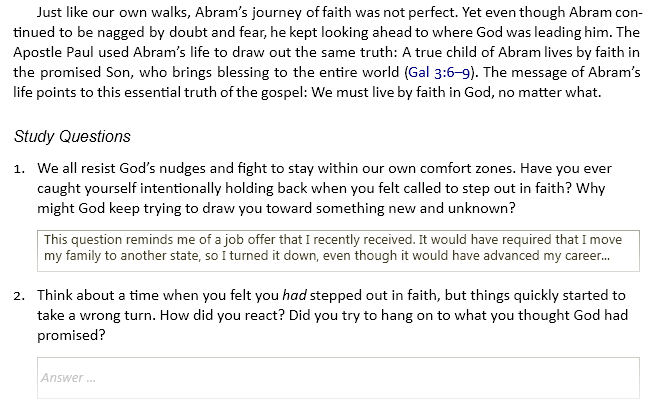
Are you the kind of Bible reader who likes to fill the margins with handwritten notes? Do you feel compelled to underline significant verses when working through a reading plan? For many people, this record of study makes their own Bible more significant to them. That’s why Abraham: Following God’s Promise includes fill-in-the-blank boxes [see an example] where you can write and save your answers to reflection questions, giving you the option of leaving the same kind of record in your Logos book.

An eight-week self-study program, Abraham: Following God’s Promise combines in-depth interpretation, theology, and application insights. And to help you reflect on the material’s relevance to your life, each section of the program contains questions encouraging you to pause and contemplate the reading and your response.

Beneath each question, fill-in-the-blank boxes allow you to record your thoughts in your Logos book. As a personal study tool, Abraham: Following God’s Promise combines the best of the digital features you’ve come to expect from Logos resources—interconnectivity with other Logos materials, memorable media, and in-depth Bible study—with the appeal of the personal notation possible in print Bibles.

As a group-study resource, Abraham: Following God’s Promise becomes a powerful tool for weekly small-group meetings. Take your digital book to your group and review the material together. With the answers to your reflection questions saved in your book, you can easily share your reflections and insights with others.

In addition, if your pastor has adopted Abraham: Following God’s Promise as your church’s curriculum, you can take your digital book to church on Sunday morning and follow along.

As your pastor preaches the sermon series, compare your insights. Your entire church—as individuals, as groups, and as a congregation—can grow together in a deeper understanding of Abraham’s story. You can discover its relevance for you and your church community starting today.

Abraham: Following God’s Promise provides a robust Bible study for those who want to grow in their understanding of Abraham’s life and its significance today. Known for providing tools for original-language study, Logos now provides an in-depth Bible study program for those who want to go deeper but who may not have training in original languages. Join us by purchasing the single volume self-study program or the complete church curriculum for pastors and leaders today.

Lead Your Church through the Life of Abraham

“How good and pleasant it is when God’s people live together in unity!” (Psalm 133:1)

Do the words of the psalmist describe your church community? How about the way your church studies Scripture? Logos has developed a new curriculum to help your community “live together” when studying the Bible: Abraham: Following God’s Promise: Complete Church Curriculum.

Designed for pastors, small-group leaders, or anyone else involved in corporate or individual study,  Abraham: Following God’s Promise walks your entire church through the life of the first patriarch. The heart of the resource is an eight-chapter commentary that combines critical interpretation with insightful application. Balancing depth and accessibility, the curriculum helps readers at all levels discover better Bible study. It makes for perfect reading during the week, whether as personal study or in preparation for your small-group or Sunday-morning worship.

To serve the needs of small-group leaders, the complete church curriculum expands the commentary into an eight-week Bible-study series. With eight lesson plans, introduction videos, and teaching slideshows, the curriculum gives you the means to usher your groups through a rich study of Abraham’s life. The lesson plans include speaker notes, reflection questions, vibrant graphics, and discussion-question handouts. You’ll be equipped to guide your faith community deeper into Abraham’s journey of faith.

For pastors, the complete church curriculum molds the commentary into an eight-week sermon series. With eight sermon outlines and teaching slideshows, Abraham gives you insightful, challenging, dynamic resources for the pulpit. Used on Sunday morning, these tools will bring to life the journey your community has been reading about during the week. With vibrant visual illustrations and sermon-outline handouts, congregations will enter into the biblical narrative together as they learn how Abraham continues to model a faithful response to God’s call.

Whether used in individual study, in small groups, or on Sunday morning, Abraham: Following God’s Promise: Complete Church Curriculum serves the church at all levels and in all teaching contexts.Known for connecting digital resources and biblical study, Logos multiplies that power by  interconnecting all levels of the church in the mission to better understand—and more readily participate in—God’s continuing story of redemption.

Join us: get the single volume or the complete church curriculum today.